
Heavy equipment jobs
How to Adjust Track Tension (Mini Excavator, Skid Steer)
- 45 min
- Easy
- 9 steps
- 9 tools
- 1 part
Snap yours and Mechy redraws these steps for it. First guide free, no sign-up.
Sample guide. A heavy-equipment mechanic hasn't reviewed this one yet, so search engines don't index it. Follow your machine's manual where they differ.
Short answer
Park level, raise and block one track, run it to clear mud, lock out, measure sag at mid-span against the manual, then pump grease in to tighten or open the grease valve one turn at most to loosen. Lower, cycle and re-check.
Safety first
Specialist task: trained techs onlyDo these before step 1.
- DANGERNever get under a track or frame held only by hydraulics. Block the frame or use rated stands.
- DANGERAdjuster grease is under very high pressure. Never remove the grease valve or fitting; it can eject and cause injection injury.
- DANGERGrease injection injury: even if it looks minor, get emergency medical care at once. Do not wipe or squeeze it.
- WARNINGLockout: attachment on the ground or blocked, engine off, key out, isolator off, tag on controls. Do this before reaching near the track.
- WARNINGOpen the grease valve slowly, one turn at most, standing to the side with your face and hands clear.
- WARNINGWork on flat, firm ground. Chock the opposite track. Keep everyone clear while the raised track runs.
- NOTICESag figures vary by machine and track. Use the OEM manual spec and measuring point.
Stop and call a pro or the dealer if
- The track will not tighten or loosen, or grease leaks from the adjuster body or seals (cylinder or seal failure).
- The track is cracked, has exposed or broken cords, or the sprocket, idler or rollers are badly worn.
- You can't safely block the machine, or the ground is soft or sloped.
- The valve or fitting is damaged or seized. Call the dealer; don't force it.
Mechy's guides help, but they don't replace the maker's manual, your training or your site's rules. If something doesn't match what you see, stop and check.
Tools
Tick what you have. In the app, Mechy ticks the ones it can see in your photos.
Parts and supplies
- 1×Track greaseGrade per OEM manualCheck before you buy
Steps
-
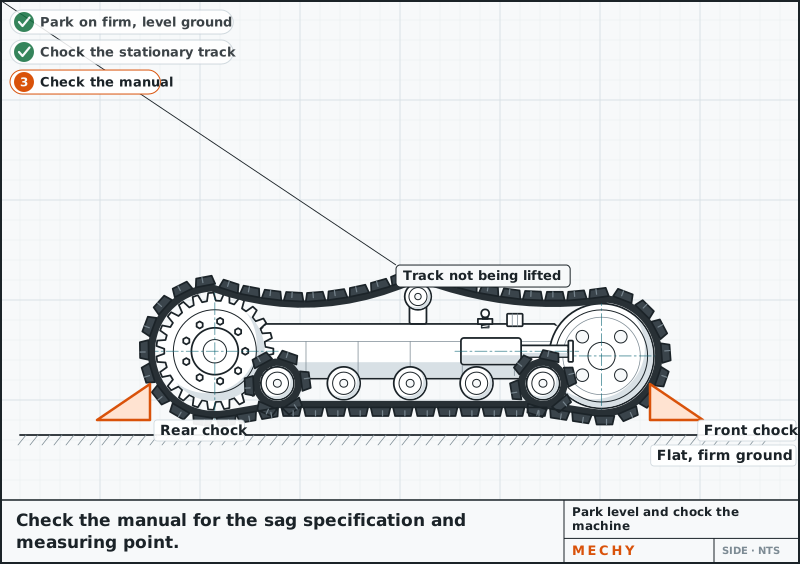
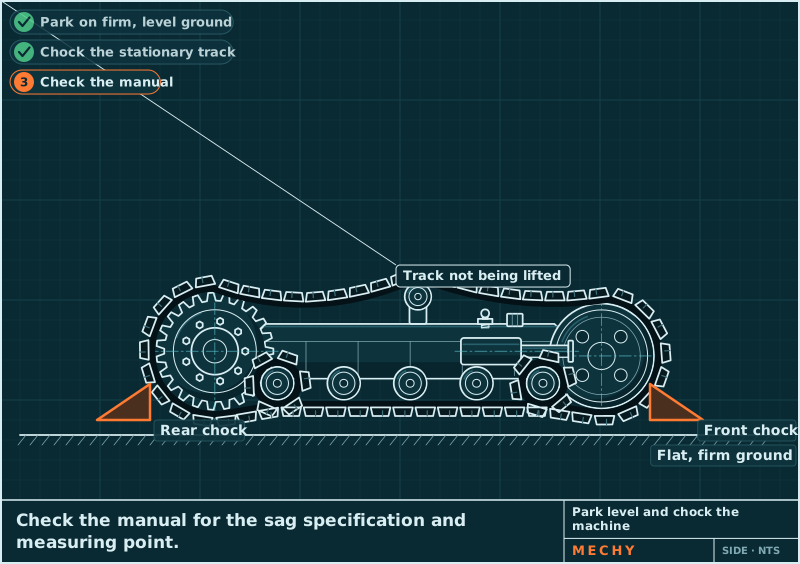
Step 1 of 9
Park level and chock the machine
Park on flat, firm ground. Chock the track you are not lifting. Look up the sag spec and measuring point in the manual before starting.
Track chocks or blocks
-
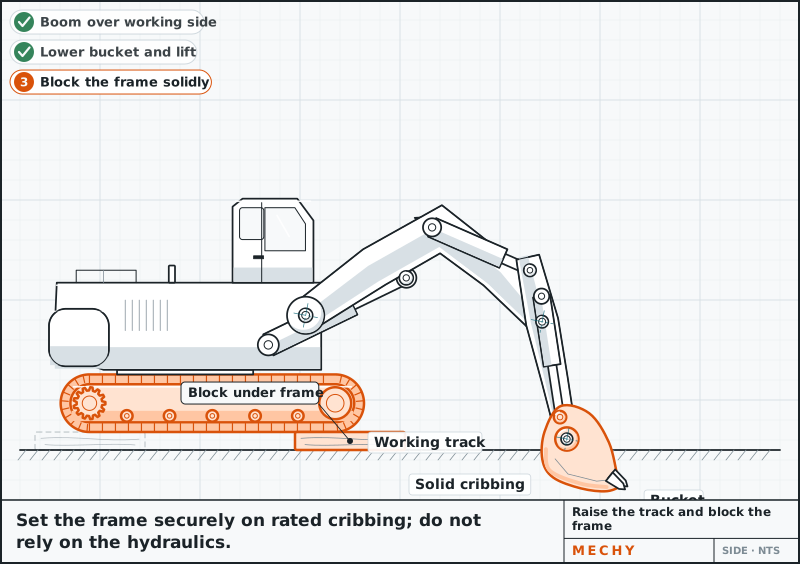
Step 2 of 9
Raise the track and block the frame
Excavator: swing the upper so the boom is over the working side, and use the boom to lift that track just clear of the ground. CTL: raise it and set it on rated stands. Block the frame solidly, then settle it on the blocks.
Never go under it held only by hydraulics. Stands or cribbing must carry the load.
Cribbing or rated jack stands
-
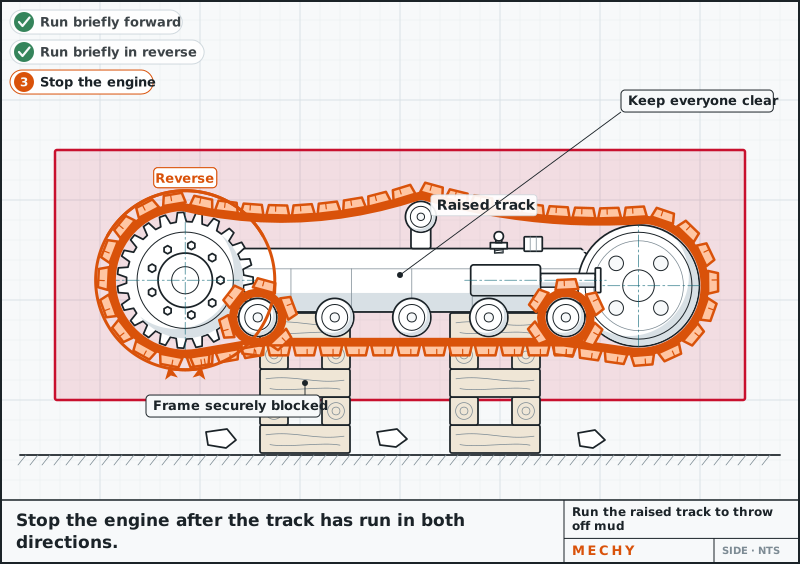
Step 3 of 9
Run the track to throw off mud
With the track blocked clear of the ground and everyone clear, run it briefly in both directions to throw off mud, then stop the engine. Keep hands, tools and body away from the turning track.
Never reach into a running track. Stop the engine before anything else.
-
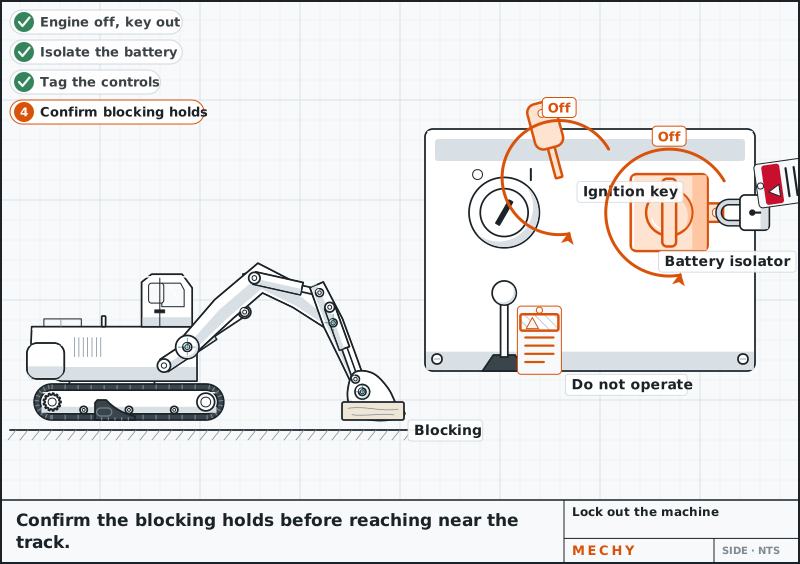
Step 4 of 9
Lock out the machine
Engine off, key out, battery isolator off, tag on the controls. Confirm the blocking holds before you reach near the track.
Lockout tag and lock
-
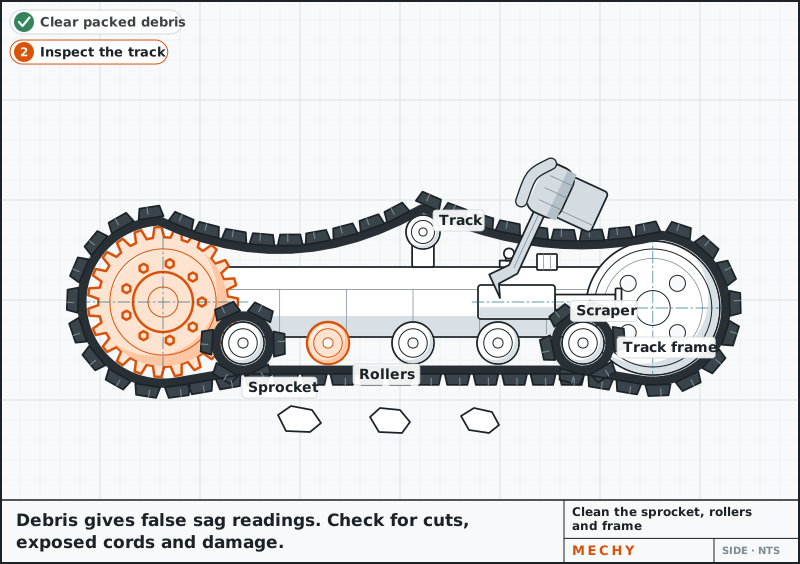
Step 5 of 9
Clean the sprocket, rollers and frame
Scrape or wash packed mud and rock from the sprocket, rollers and frame. Packed debris gives false sag readings. Look for cuts, exposed cords and damage.
Pressure washer or mud scraper
-
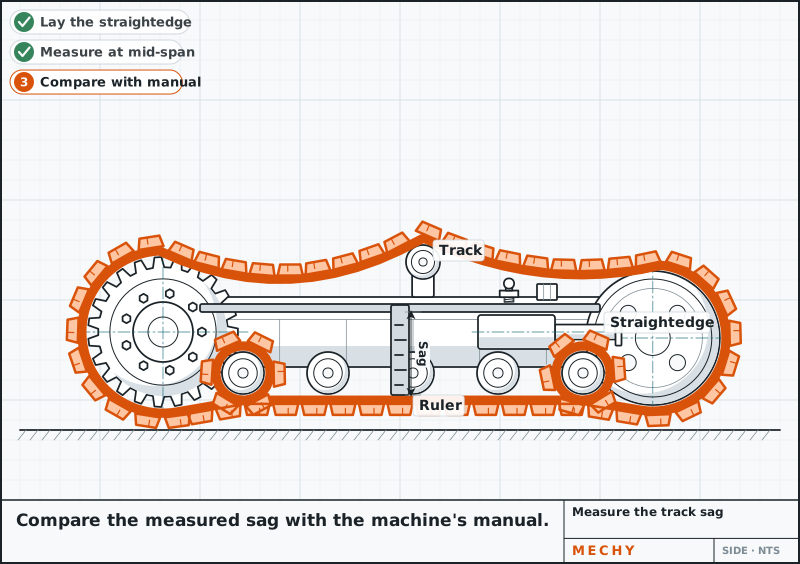
Step 6 of 9
Measure the sag
Lay the straightedge along the track frame or bottom roller. Measure the gap down to the track at the middle, at the point the manual gives. Compare it with the manual.
Track sag: Per your manual (spec and measuring point) Check it against your manual.
Straightedge, Tape measure or ruler
-
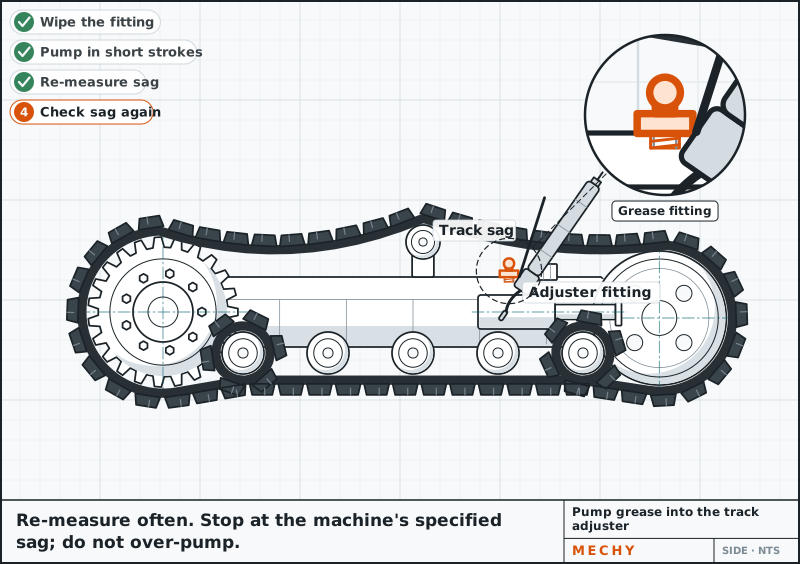
Step 7 of 9
Tighten: pump grease into the adjuster
Wipe the fitting, then pump the grease gun into the adjuster fitting in short strokes. Re-measure often until sag is within spec. Stop at spec; do not over-pump.
Grease gun
-
Step 8 of 9
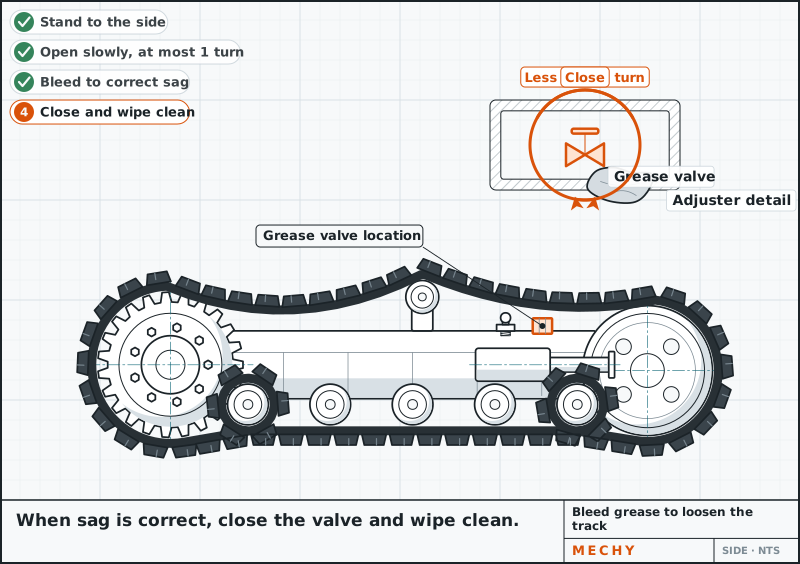
Loosen: bleed grease at the grease valve
Stand to the side. Open the grease valve slowly, one turn at most, and let grease out until sag is in spec, then close it and wipe clean. If the track does not slacken, close the valve and stop.
Never remove the grease valve or the fitting. Never open past one turn. Pressure can eject them.
Wrench for grease valve, Rags and cardboard
-
Step 9 of 9
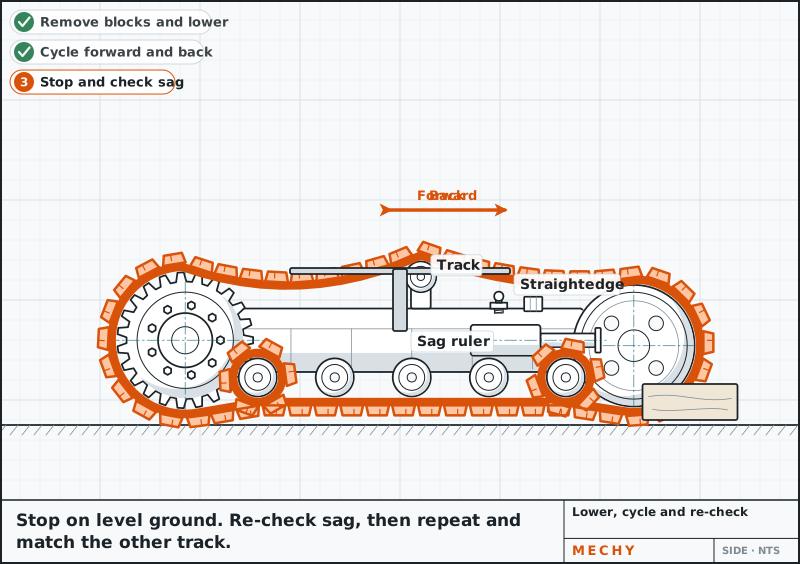
Lower, cycle and re-check
Clear people and tools, remove the lockout, start the engine and lift the frame just off the blocking. Pull the blocks and lower it. Run forward and back several meters, stop on level ground, re-check sag and look for grease leaks at the adjuster. Match the other track. Re-check after a short working period.
Tape measure or ruler


Common mistakes
- Measuring sag with mud packed in the frame, which gives a false reading.
- Working under a track held up only by the boom or hydraulics.
- Removing the grease valve or fitting instead of just opening it, risking grease injection.
- Over-pumping grease so the track is far too tight.
- Not re-checking sag after lowering and running the machine.
Questions
How tight should a mini excavator track be?
Tight enough that the sag at mid-span matches the manual's spec and measuring point. Specs differ by machine and track, so use your OEM manual rather than a general figure.
How do I tighten a mini excavator track?
Raise and block the track, clean it, measure the sag, then pump grease into the adjuster fitting in short strokes, re-measuring until it is in spec.
How do I loosen a track safely?
Stand to the side and open the grease valve slowly, no more than one turn. Never remove the valve or fitting; the grease is under very high pressure.
What happens if the track is too loose?
It can wander and come off the sprocket or idler, and the lugs and guides wear faster.
Why is a too-tight track bad?
It overloads the sprocket, idler, rollers and bearings and can stretch the steel cords, so the undercarriage wears fast.
Updated
Different machine? Snap yours.
Mechy reads the machine and the part from your photo and redraws the steps, tools and parts for it.
First guide free. No sign-up, no card.