Home repairs
How to Remove a Stripped Screw
- 15 min
- Easy
- 6 steps
- 7 tools
- 1 part
Snap yours and Mechy redraws these steps for it. First guide free, no sign-up.
Short answer
Try these in order and stop at the first one that works: a bit that fills the recess, a rubber band, a tapped-in bit, locking pliers on the head, and finally a screw extractor. Each step costs a little more damage than the one before.
Safety first
DIY friendlyDo these before step 1.
- WARNINGWear safety glasses. Bits and extractors are hard and brittle: if one snaps, pieces fly.
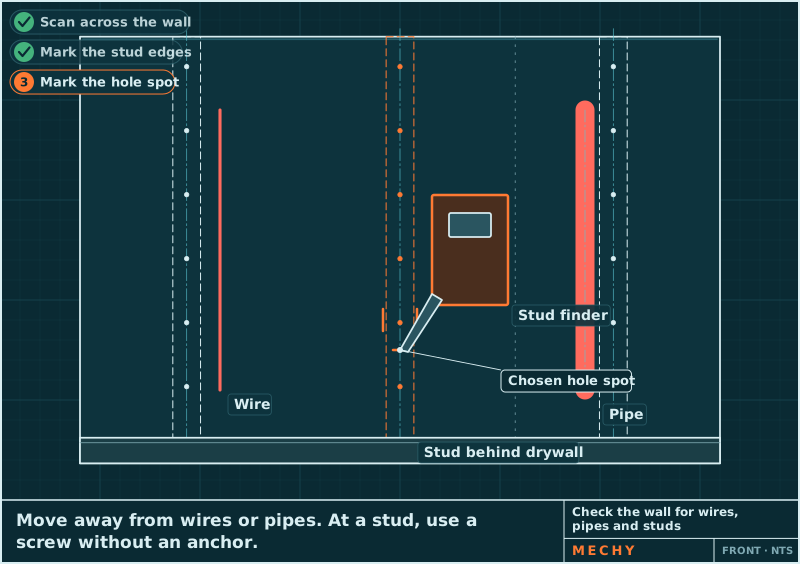
- WARNINGScrew in a wall, ceiling or appliance? Turn off the power to that circuit or unplug it first, and check for pipes and cables before drilling.
- NOTICEClamp small parts down. Never hold a part in your hand while drilling it.
Stop and call a pro or the dealer if
- The screw holds something structural (a railing, a ladder, a car part) and the extractor snaps off inside it.
- The screw is in a live electrical box or a gas appliance.
Mechy's guides help, but they don't replace the maker's manual, your training or your site's rules. If something doesn't match what you see, stop and check.
Tools
Tick what you have. In the app, Mechy ticks the ones it can see in your photos.
Parts and supplies
- 1×Replacement screwSame diameter, length and head as the old oneCheck before you buy Size chart
Steps
-
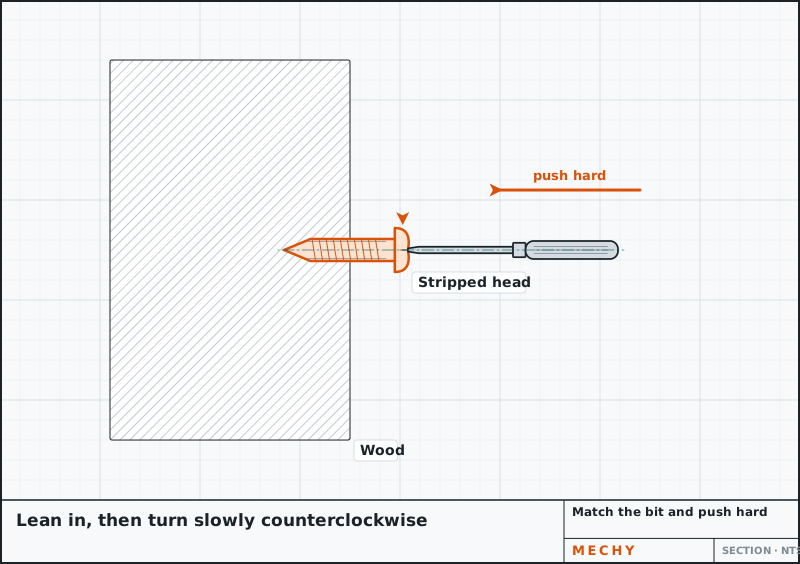
Step 1 of 6
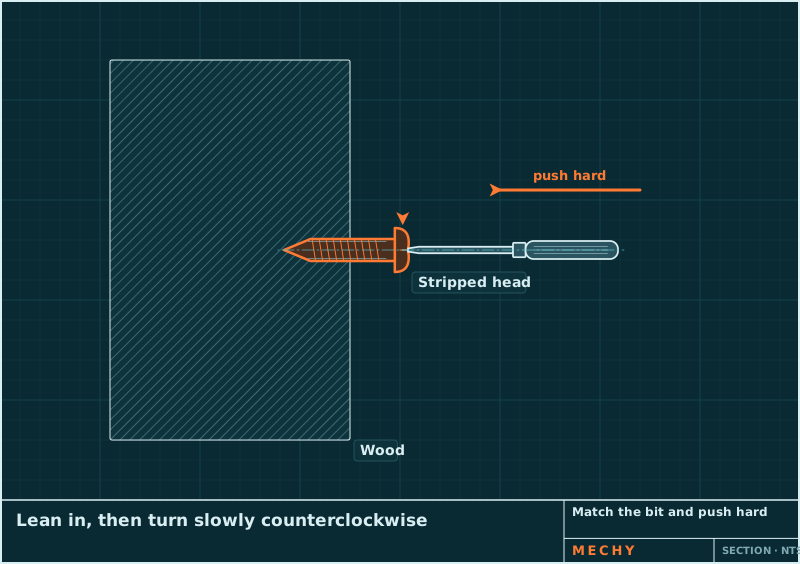
Use the right bit and push hard
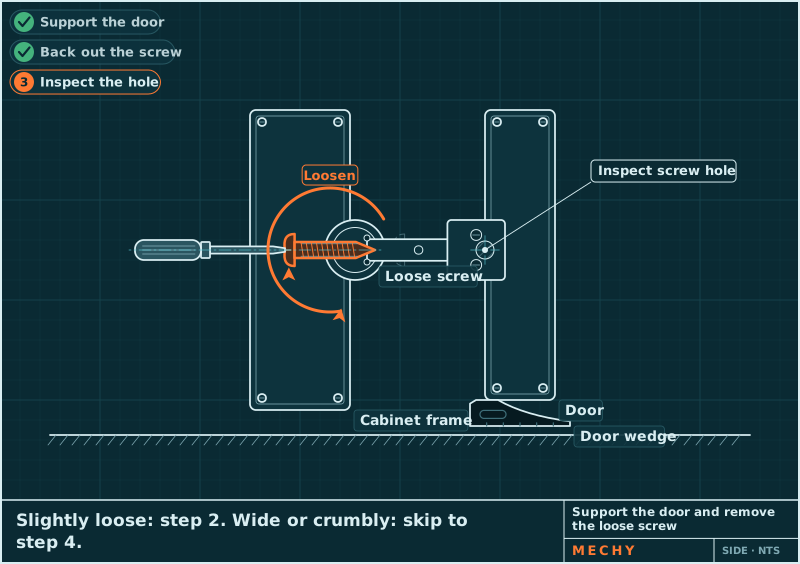
Fit a fresh bit that fills the recess completely (most household screws take a #2 Phillips). Lean your weight into it and turn slowly counterclockwise.
Screwdriver or bit that fits the head
-
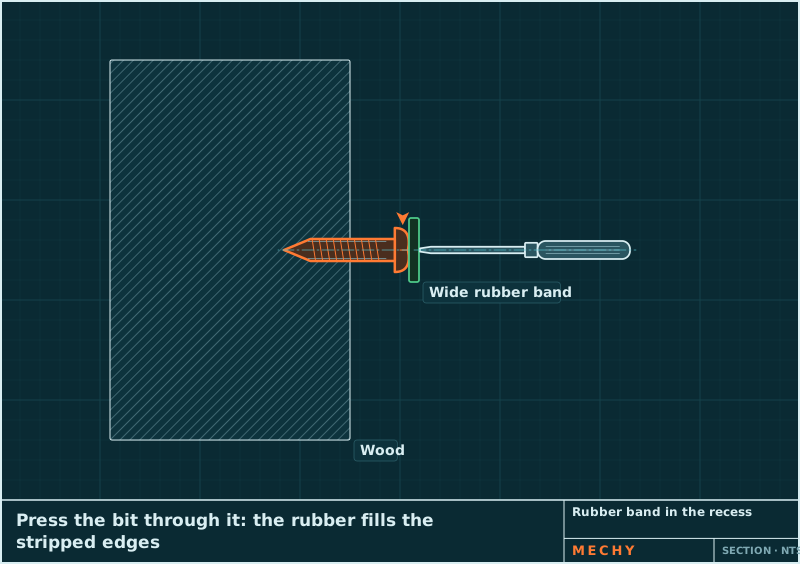
Step 2 of 6
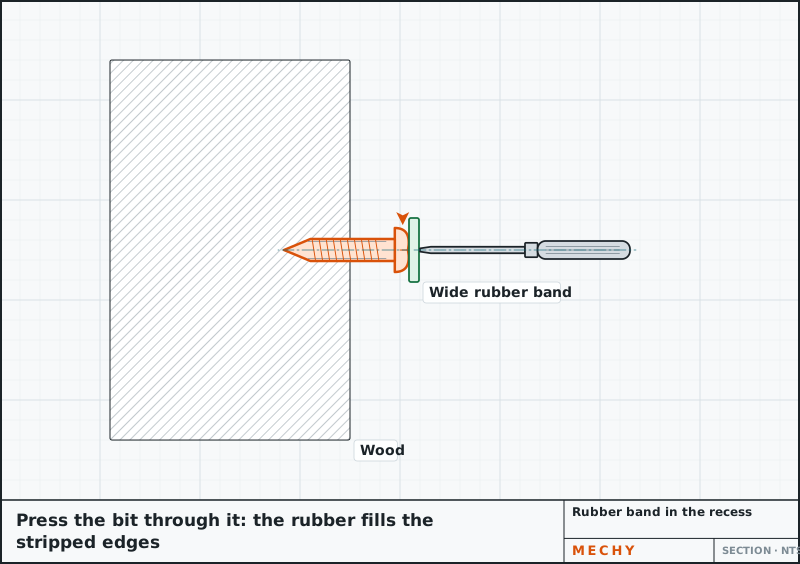
Put a rubber band in the recess
Lay a wide rubber band flat over the head, press the bit through it into the recess, and turn slowly with firm pressure. The rubber fills the worn edges.
Wide rubber band
-
Step 3 of 6
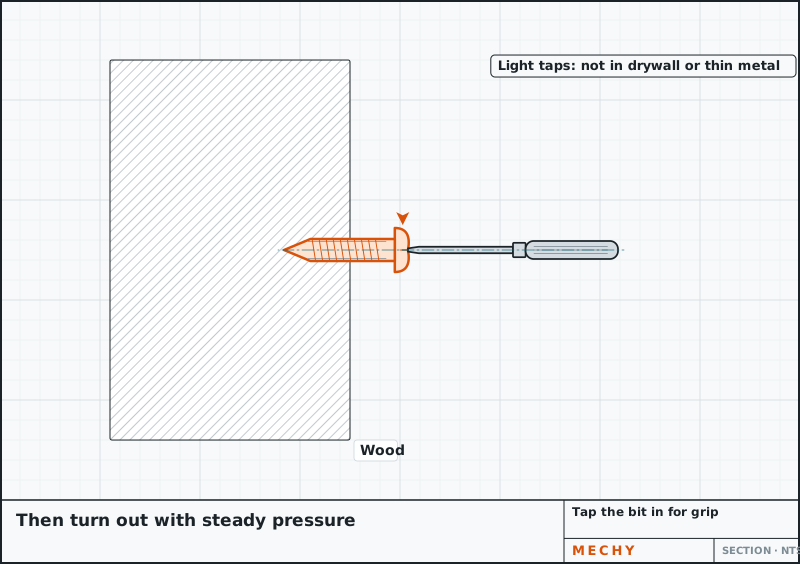
Tap the bit in for grip
Seat the bit with one or two light hammer taps so it bites into the head, then turn it out with steady pressure. Skip this on drywall, tile or thin metal.
Light taps only: hard blows crack tile and dent thin panels.
Hammer
-
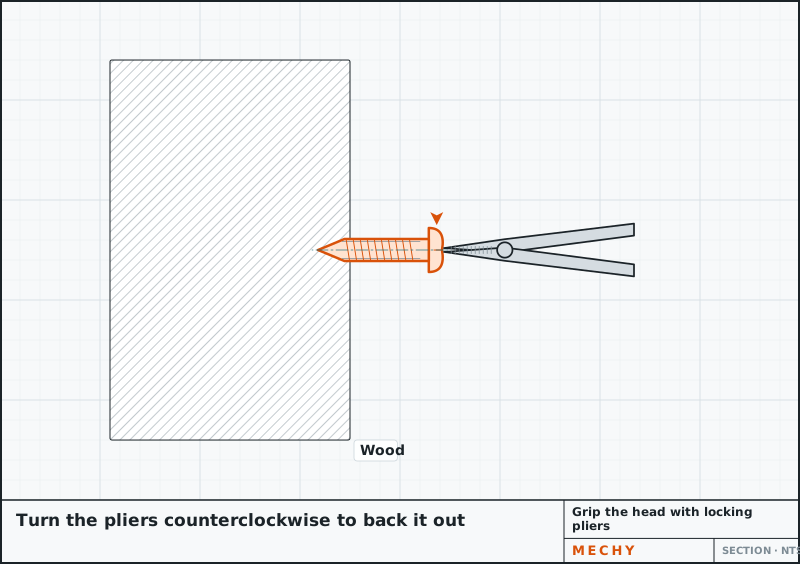
Step 4 of 6
Grip the head with locking pliers
If the head sticks out from the surface, clamp locking pliers tight across it and turn counterclockwise.
Locking pliers
-
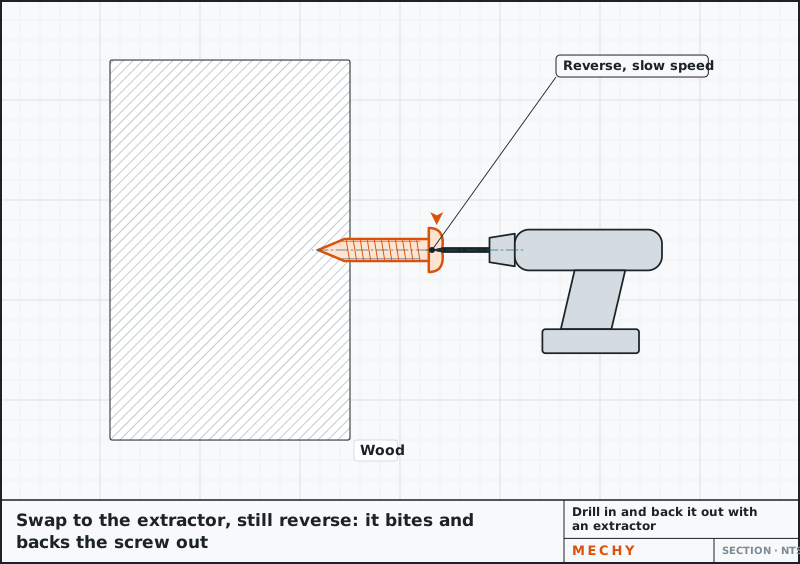
Step 5 of 6
Use a screw extractor
Drill a small pilot hole in the center of the head with the drill in reverse. Then fit the extractor, keep the drill in reverse at low speed, and press: it bites and backs the screw out.
Go slow. A snapped extractor is much harder to remove than the screw.
Drill/driver with reverse, Screw extractor set, Safety glasses
-
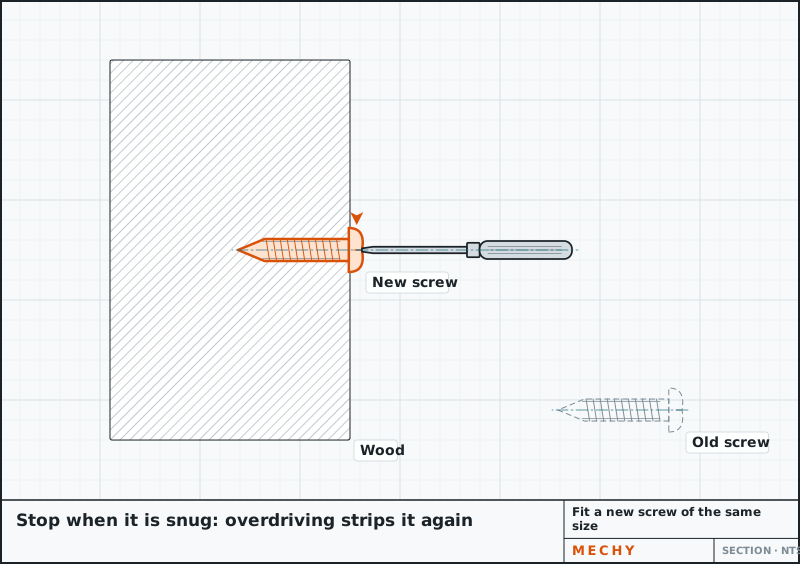
Step 6 of 6
Fit a new screw
Throw the damaged screw away and drive a new one of the same size. Stop when it is snug: overdriving strips the head or the hole again.


Common mistakes
- Using a worn bit or the wrong type (a Phillips bit in a Pozidriv screw slips and strips it).
- Pushing too lightly and letting the bit cam out of the recess.
- Drilling the pilot hole with the drill turning forward, which can tighten the screw further.
- Reusing the stripped screw.
Questions
Does the rubber band trick really work?
On a lightly stripped head, often yes: the rubber fills the worn recess so the bit can grip. If the recess is rounded out completely, go to locking pliers or an extractor.
How does a screw extractor work?
It is a hardened bit with a reverse thread. You drill a small hole in the screw head, then turn the extractor counterclockwise; as it digs in, it turns the screw out with it.
Can I remove a stripped screw without a drill?
Usually. Try the right bit with firm pressure, a rubber band, a light tap to seat the bit, or locking pliers if the head sticks out. You need a drill only for an extractor.
How do I stop screws stripping?
Match the bit to the head (size and type), keep it square to the screw, push firmly, replace worn bits, and drill pilot holes in hardwood.
Updated
Not quite the same? Snap yours.
Mechy looks at your photo and redraws the steps for what you actually have.
First guide free. No sign-up, no card.
Related guides