Home repairs
How to Fix a Stripped Screw Hole in Wood
- 45 min
- Very easy
- 7 steps
- 7 tools
- 5 parts
Snap yours and Mechy redraws these steps for it. First guide free, no sign-up.
Short answer
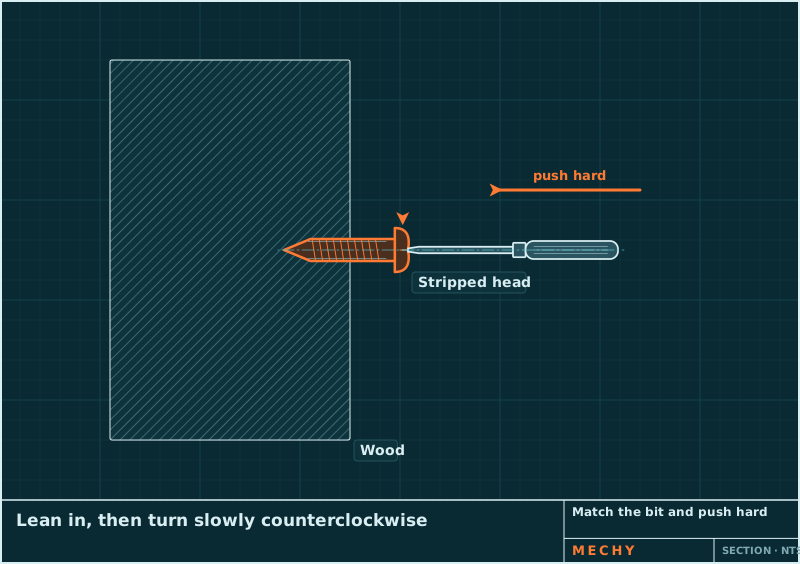
For a screw that spins in wood, try a slightly longer or thicker screw first. If it still spins, pack the hole with glue-dipped toothpicks, or drill it out and glue in a dowel. Let the glue dry, drill a small pilot hole, then drive the screw until snug and stop.
Safety first
DIY friendlyDo these before step 1.
- WARNINGWear safety glasses when drilling or snapping off wood; chips fly.
- WARNINGSupport a heavy door with wedges or a helper, and remove only one hinge screw at a time.
- WARNINGBefore drilling into a wall, door frame or jamb, check that no wires or pipes run close by.
- NOTICEClamp or hold small furniture parts steady before drilling so the bit can't slip into your hand.
- NOTICEWipe off extra wood glue right away with a damp rag; dry glue shows under paint and stain.
Stop and call a pro or the dealer if
- The wood is cracked, split or rotten around the hole: the part may need replacing or a carpenter.
- The hinge keeps pulling out of a thin or hollow door or a cabinet panel that is crumbling.
- The door frame itself is loose or damaged, or you hit wires or pipes while drilling.
Mechy's guides help, but they don't replace the maker's manual, your training or your site's rules. If something doesn't match what you see, stop and check.
Tools
Tick what you have. In the app, Mechy ticks the ones it can see in your photos.
Parts and supplies
- 1×Wood screw, same head typeA little longer or one size thicker than the old screwCheck before you buy Size chart
- 1×Wooden toothpicks or golf teesPlain wood, not plasticCheck before you buy
- 1×Wood glueStandard PVA (white or yellow) wood glueCheck before you buy
- 1×Hardwood dowelTypical: 1/4 in or 5/16 in; match your drill bitCheck before you buy
- 1×Long hinge screw (sagging door)Typical: 3 in; same head and gauge as the hinge screwsCheck before you buy Size chart
Steps
-
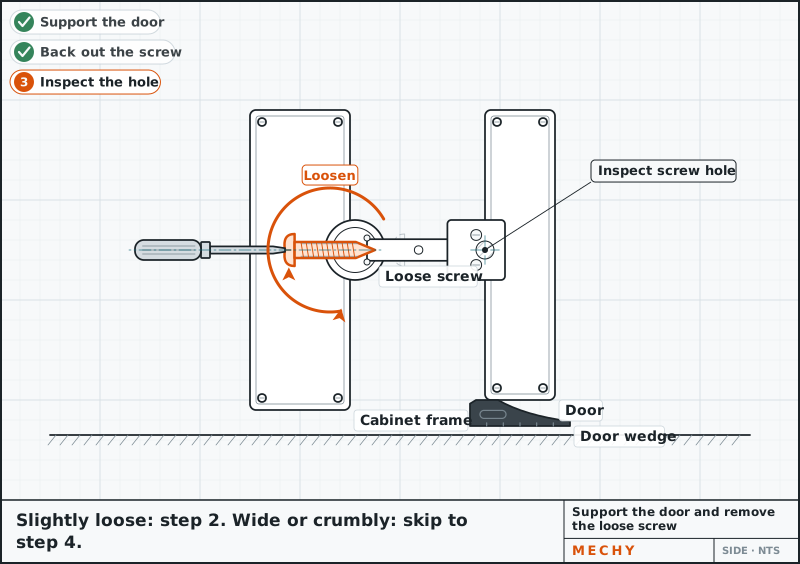
Step 1 of 7
Support the part and remove the loose screw
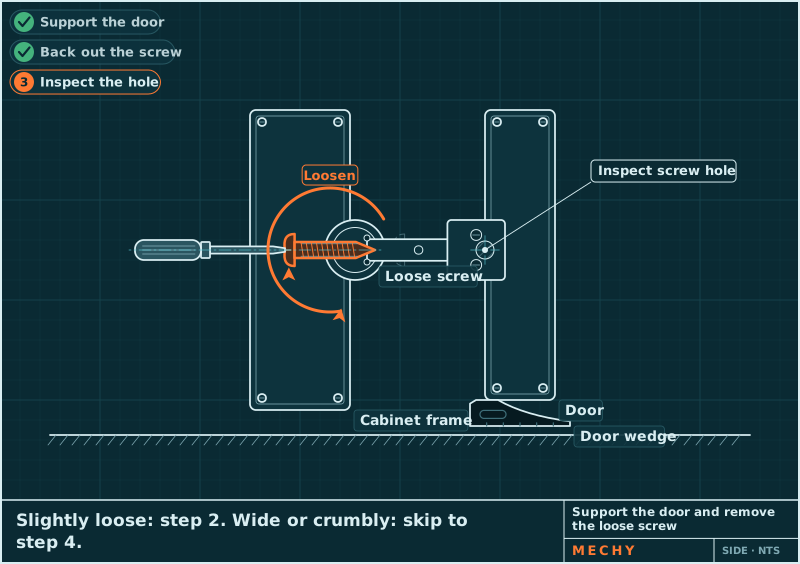
Wedge the door or hold the part so it can't drop. Remove only the one spinning screw, leaving the others in. Look at the hole: if only a little loose, go to step 2. If it is wide or crumbly, skip to step 4.
Keep a hand on a heavy door until the wedges are holding it.
Screwdriver or drill with driver bit, Wedges or folded cardboard
-
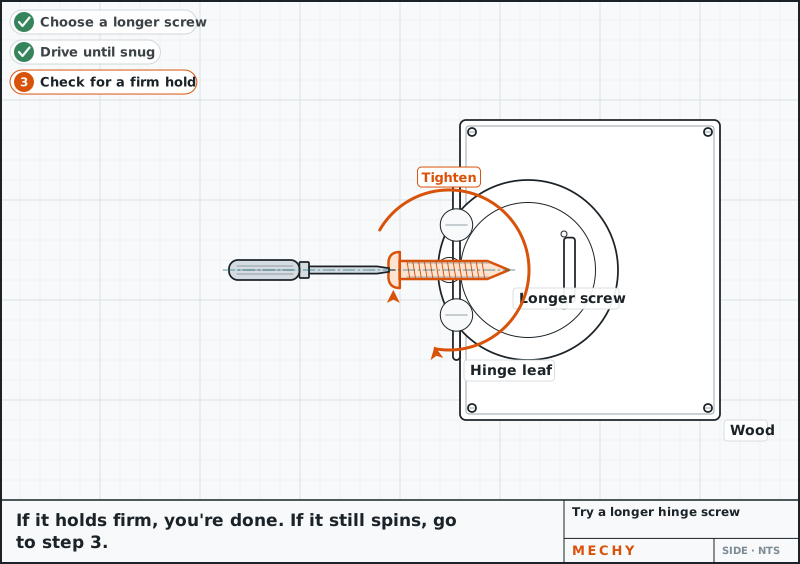
Step 2 of 7
Try a slightly longer or thicker screw
Pick a screw with the same head shape that is a bit longer or one size thicker. Drive it in until snug. If it bites and the hinge is firm, you are done. If it still spins, go to step 3.
Head must sit flat in the hinge, and the tip must not poke out the back of thin wood.
Screwdriver or drill with driver bit
-
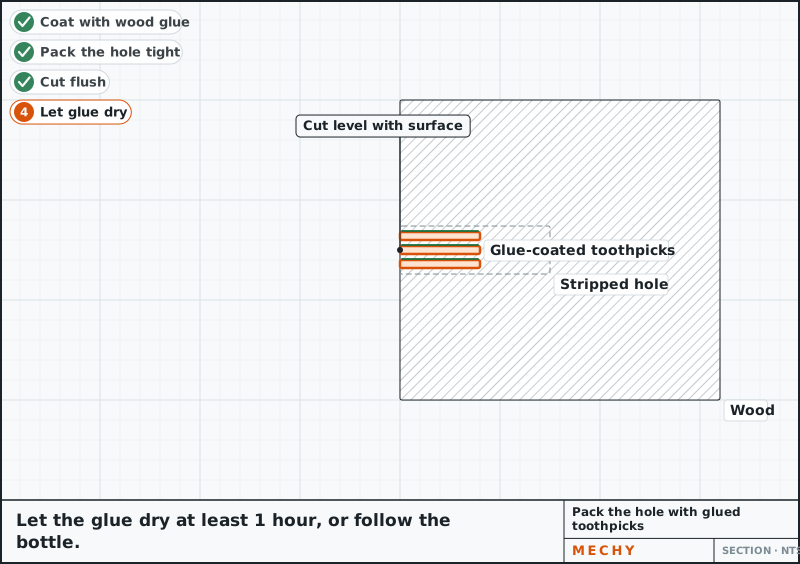
Step 3 of 7
Pack the hole with glued toothpicks
Dip 3 to 5 toothpicks (or a golf tee) in wood glue and tap them into the hole until packed tight. Snap or cut them off flush. Wipe off extra glue. Let it dry as long as the glue bottle says before moving on.
Do not drive a screw into wet glue; it will not hold.
Hobby knife or flush-cut saw, Hammer, small, Damp rag
-
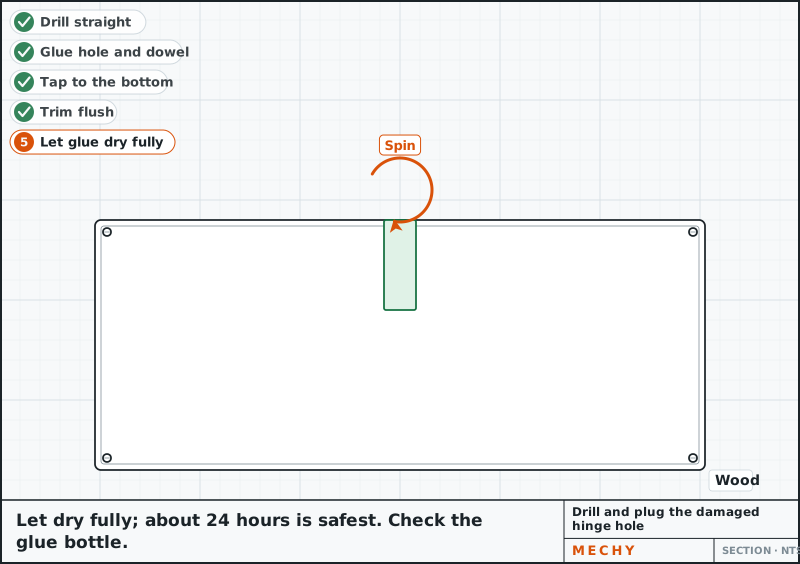
Step 4 of 7
Badly chewed hole: drill it out and glue in a dowel
Drill the hole out clean and straight with a bit the same width as the dowel, a little deeper than the old screw hole. Put glue in the hole and on the dowel, tap it to the bottom, cut it flush, and wipe off glue. Let it dry fully; about 24 hours is safest.
Hold the drill straight, in line with the old screw.
Drill bit matching the dowel, Hammer, small, Hobby knife or flush-cut saw
-
Step 5 of 7
Drill a small pilot hole in the repair
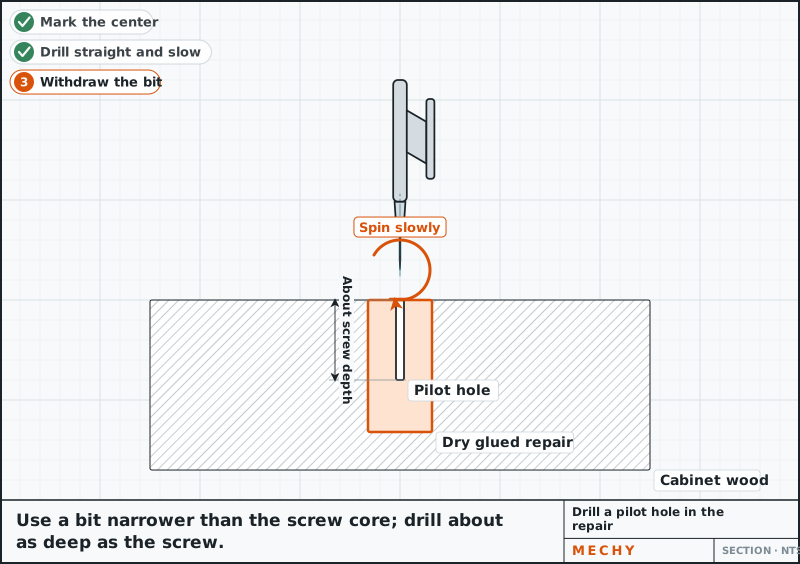
Once the glue is fully dry, mark the center of the repair. Choose a bit about the width of the screw's core (the solid shaft between the threads), not the threads. Drill about as deep as the screw, slowly and straight.
Wrap tape on the bit as a depth stop so you do not drill through.
Drill with small bits
-
Step 6 of 7
Drive the screw until snug, then stop
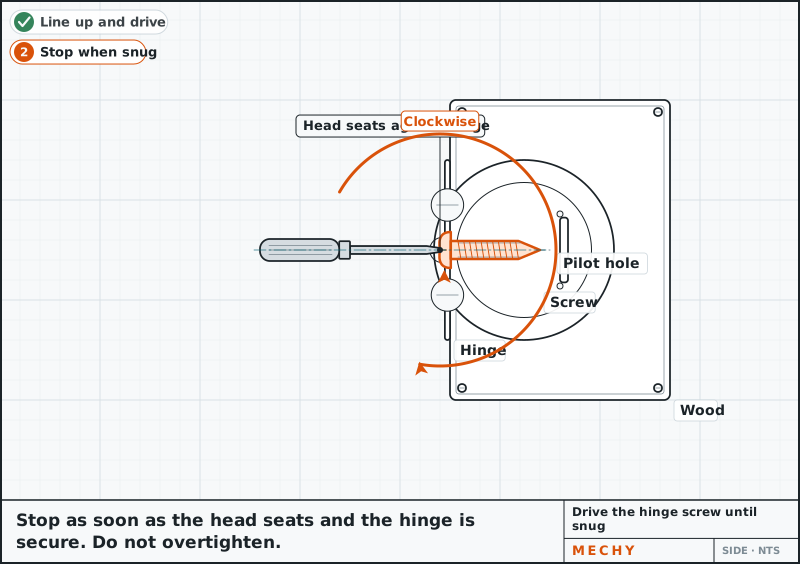
Line up the hinge and drive the screw in. Stop the moment the head sits tight and the hinge does not move. Going further strips the new wood and you start over.
Overdriving strips the hole again. Use hand pressure or the drill's low clutch setting.
Screwdriver or drill with driver bit
-
Step 7 of 7
Sagging door: add a long screw to the top hinge
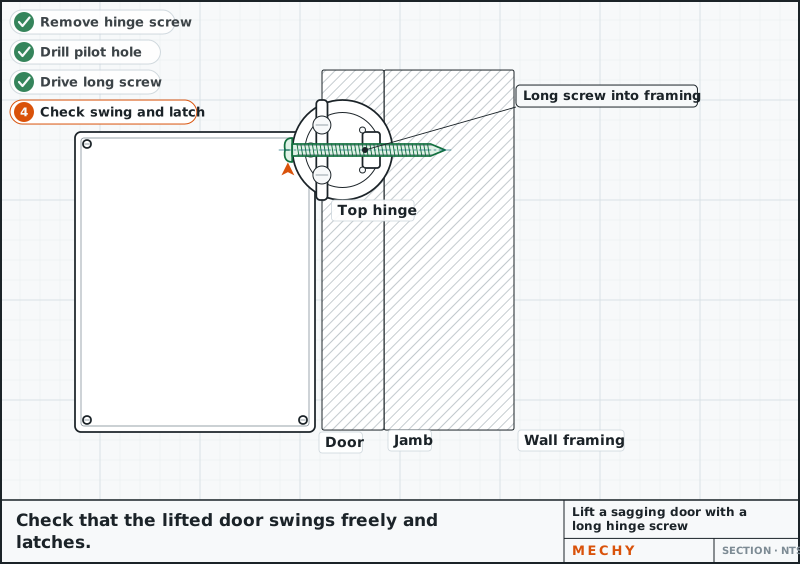
Support the door. Remove one top-hinge screw, the one nearest the door's closed edge. Drill a pilot hole through the jamb (the frame beside the door) toward the framing behind, then drive in a long screw until snug. Check the door swings and latches.
Check for wires and pipes first. If the screw will not bite, stop.
Drill with small bits, Screwdriver or drill with driver bit, Wedges or folded cardboard


Common mistakes
- Driving the screw in before the glue is fully dry.
- Skipping the pilot hole, which can split the repair.
- Overtightening the screw and stripping the hole again.
- Using plastic toothpicks or too little glue.
- Removing all hinge screws on a heavy door without supporting it.
Questions
What wood glue works for a stripped screw hole?
Ordinary white or yellow PVA wood glue works well. Coat the toothpicks or dowel, pack them in, and let the glue dry as the bottle directs before drilling and driving the screw.
Can I use toothpicks to fix a stripped screw hole?
Yes, for a slightly worn hole. Dip plain wooden toothpicks in glue, pack the hole tight, cut them flush, let dry, then drill a small pilot hole and drive the screw.
How long should the glue dry before I put the screw back?
Follow the glue bottle. Waiting until it is fully dry is safest, often overnight for a dowel repair.
What if the hole is too big for toothpicks?
Drill the hole out clean, glue in a hardwood dowel, cut it flush, let it dry fully, then drill a pilot hole and drive the screw.
Updated
Not quite the same? Snap yours.
Mechy looks at your photo and redraws the steps for what you actually have.
First guide free. No sign-up, no card.
Related guides