Home repairs
How to Install a Drywall Anchor (Which Type, What Size)
- 30 min
- Easy
- 7 steps
- 7 tools
- 4 parts
Snap yours and Mechy redraws these steps for it. First guide free, no sign-up.
Short answer
Pick a drywall anchor by the weight you will hang: ribbed plastic or self-drilling for light, molly for medium, toggle for heavy. Check the wall for wires and pipes first, use the hole size on the package, and screw into a stud when you can.
Safety first
DIY friendlyDo these before step 1.
- DANGERWires or pipes may be in the wall. Switch off power to the room at the breaker before you drill, and never drill near outlets or switches.
- WARNINGWear safety glasses. Drywall dust and falling bits can hurt your eyes, especially when drilling overhead.
- WARNINGDo not hang heavy items from a ceiling on anchors that are not rated for ceilings. They can fall.
- NOTICEUse the package rating for your wall thickness (often 1/2 in or 5/8 in) and pick an anchor rated well above the item's weight.
Stop and call a pro or the dealer if
- the detector or the drill shows a wire or pipe behind your spot. Stop and move, or call an electrician or plumber.
- the anchor keeps spinning or the drywall is crumbly, wet or cracked. Use a stud or call a pro.
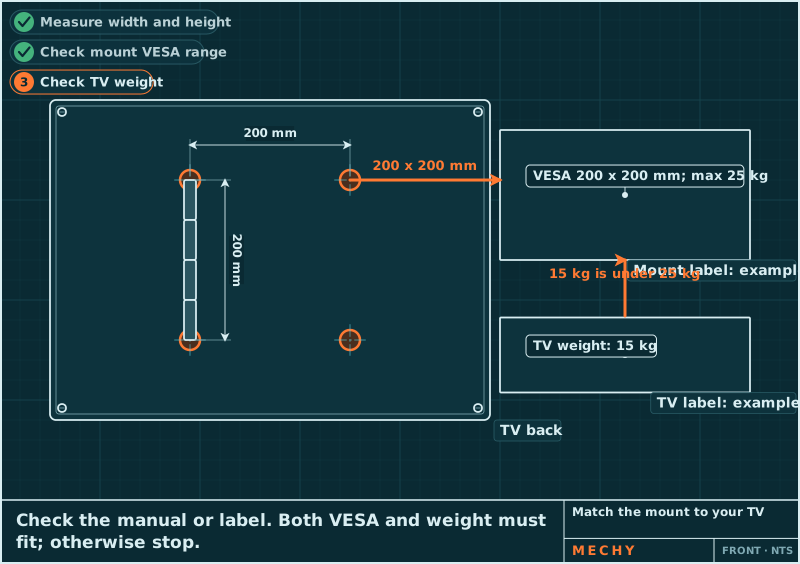
- you are hanging something very heavy or something that could hurt someone if it falls (a TV mount, a cabinet or a ceiling fixture) and the rating is unclear.
Mechy's guides help, but they don't replace the maker's manual, your training or your site's rules. If something doesn't match what you see, stop and check.
Tools
Tick what you have. In the app, Mechy ticks the ones it can see in your photos.
Parts and supplies
- 1×Ribbed plastic expansion anchor with screwLight loads; rating for your wall thicknessCheck before you buy Size chart
- 1×Self-drilling threaded anchor with screwLight loads; rating on packageCheck before you buy Size chart
- 1×Hollow-wall (molly) anchorMedium loads; length to match wall thicknessCheck before you buy Size chart
- 1×Toggle bolt or strap toggleHeavy loads; rating on packageCheck before you buy Size chart
Steps
-
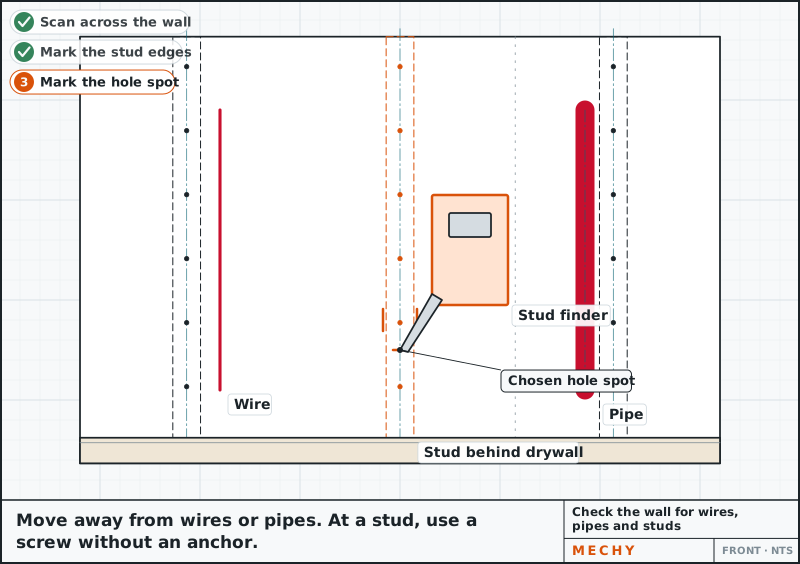
Step 1 of 7
Check the wall for wires, pipes and studs
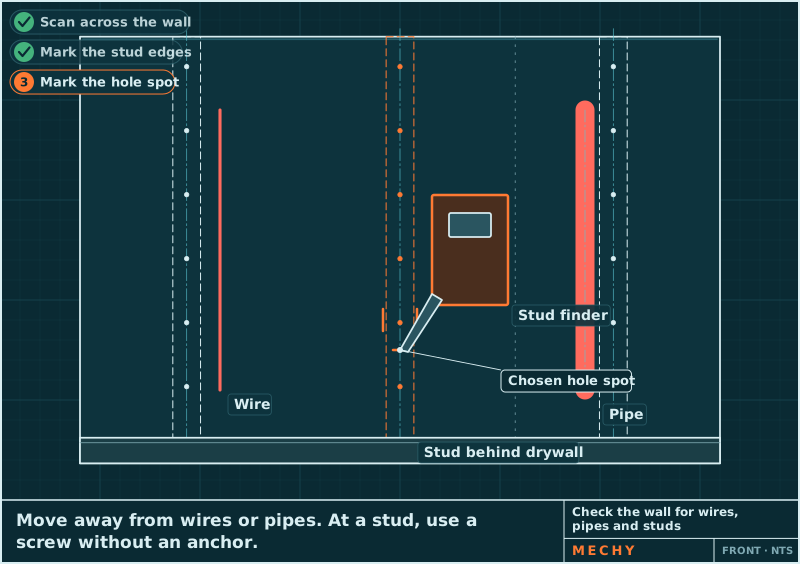
Switch off power to the room at the breaker. Slide the stud finder across the spot and mark what it finds. If it finds a wire or pipe, move over. If there is a stud, skip the anchor and screw into the stud.
A stud finder can miss pipes and wires. Unsure? Pick another spot, and stay away from outlets and switches.
Stud finder, Pencil
-
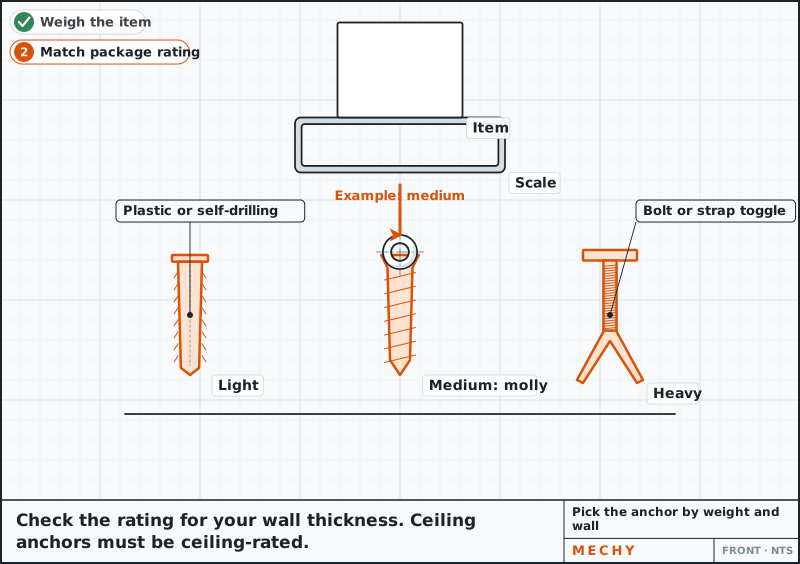
Step 2 of 7
Pick the anchor by weight and wall
Weigh the item. Choose by the package rating for your wall thickness: ribbed plastic or self-drilling for light, molly for medium, toggle bolt or strap toggle for heavy. For a ceiling, buy only ceiling-rated anchors.
-
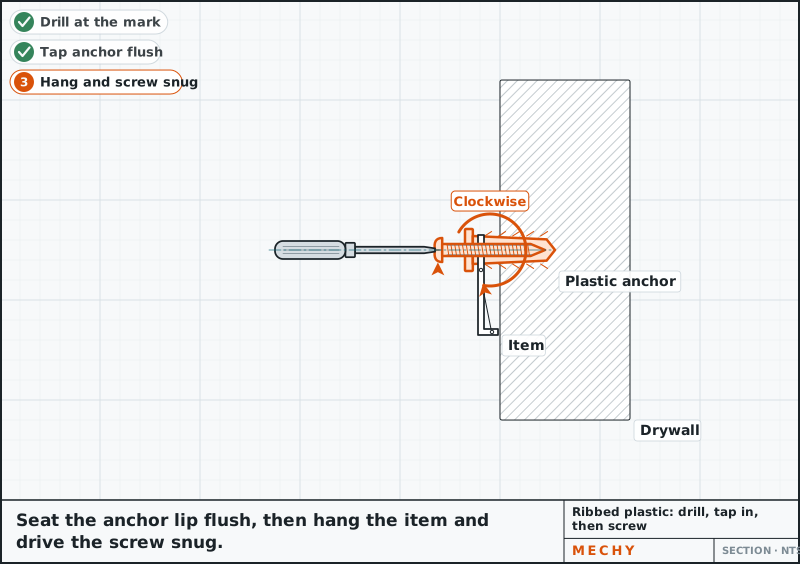
Step 3 of 7
Ribbed plastic: drill, tap in, then screw
Drill the hole at the size printed on the package. Tap the plastic anchor in with the hammer until its lip sits flush with the wall. Hang the item and drive the screw until snug.
A hole too big makes the anchor spin. Too small and the anchor cracks.
Power drill and drill bit, Hammer, Screwdriver
-
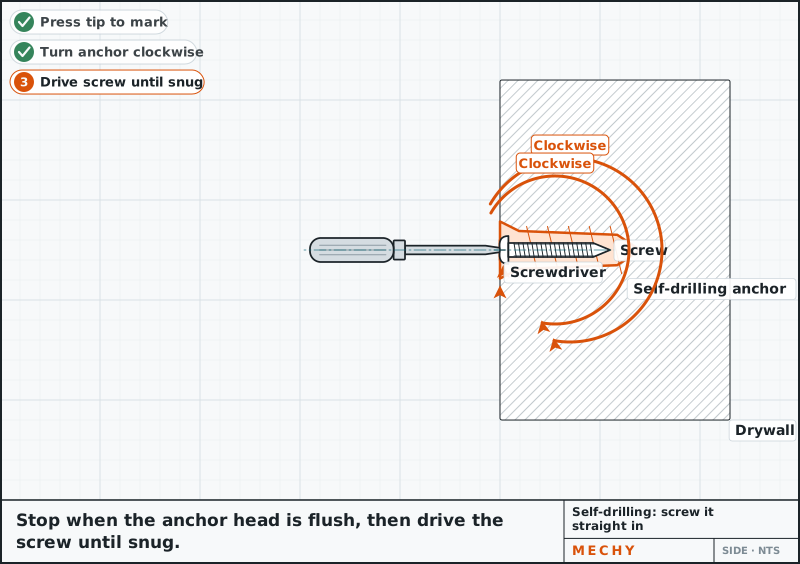
Step 4 of 7
Self-drilling: screw it straight in
Press the tip of the anchor to the mark. Turn it clockwise by hand with the screwdriver, with firm pressure, until the head sits flush with the wall. No hole is needed. Then drive the screw in until snug.
Stop when it is flush. Turning more strips the drywall and the anchor spins loose.
Screwdriver
-
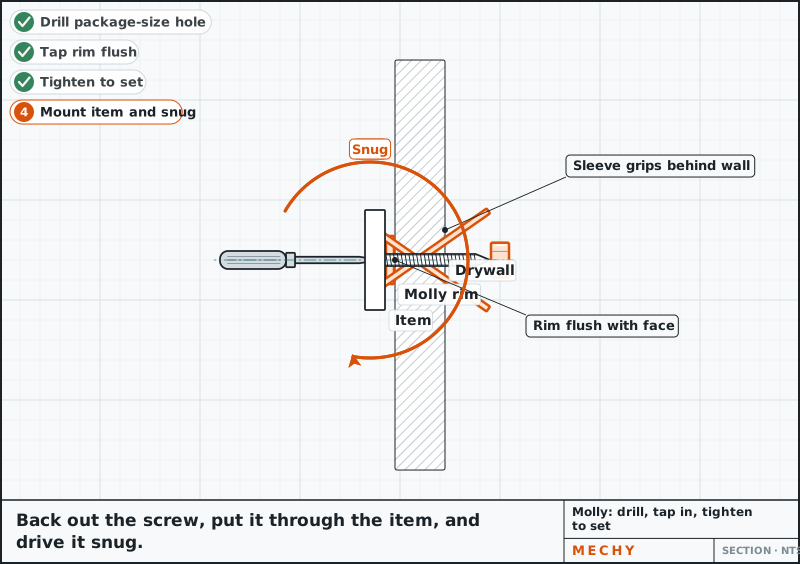
Step 5 of 7
Molly: drill, tap in, tighten to set
Drill the hole at the size on the package. Tap the molly in until its rim is flush. Turn its screw clockwise until the sleeve grips behind the wall and the screw gets hard to turn. Back the screw out, pass it through the item, and drive it snug.
Stop when the screw gets hard to turn. Forcing it can strip the sleeve.
Power drill and drill bit, Hammer, Screwdriver
-
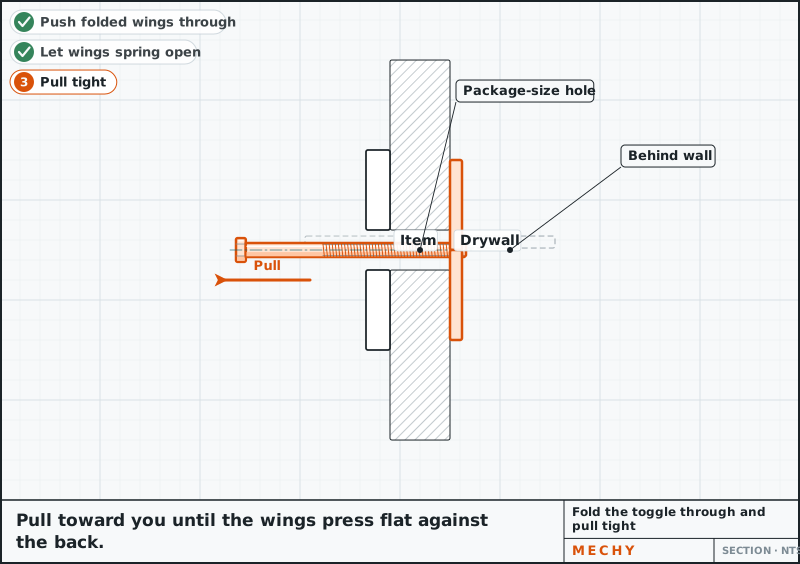
Step 6 of 7
Toggle: fold through the hole and pull tight
Drill the hole at the size on the package, usually bigger than the others. Toggle bolt: pass the bolt through the item, fold the wings, push them through, then tighten. Strap toggle: push the channel through, pull the strap tight, slide the cap to the wall, snap off the strap.
Toggle bolt: thread the bolt through the item BEFORE the wings go in. Otherwise the wings drop inside the wall.
Power drill and drill bit, Screwdriver
-
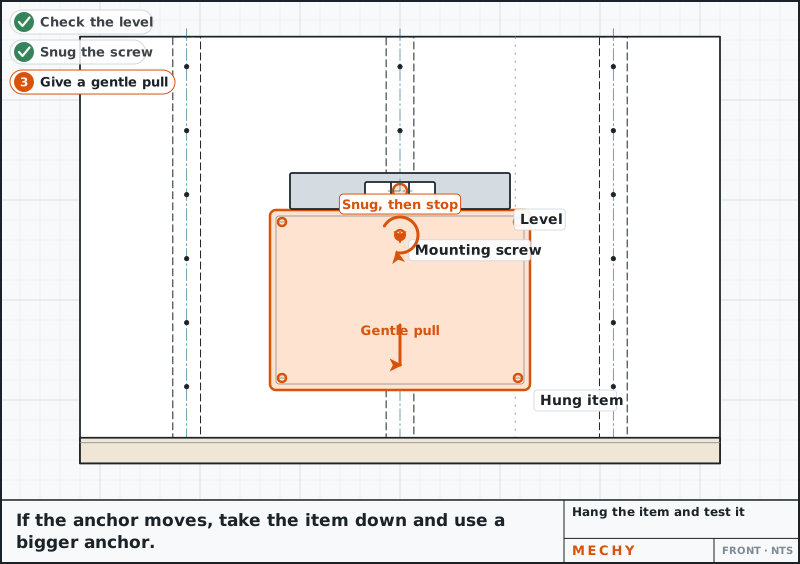
Step 7 of 7
Hang the item and test it
Check with the level. Drive the screw until the item is snug and does not wobble, then stop. Pull gently. If the anchor moves, take the item down and use a higher-rated anchor in a new spot.
Overtightening makes the anchor spin in the hole and lose its grip.
Screwdriver, Level


Common mistakes
- Drilling without checking for wires and pipes first.
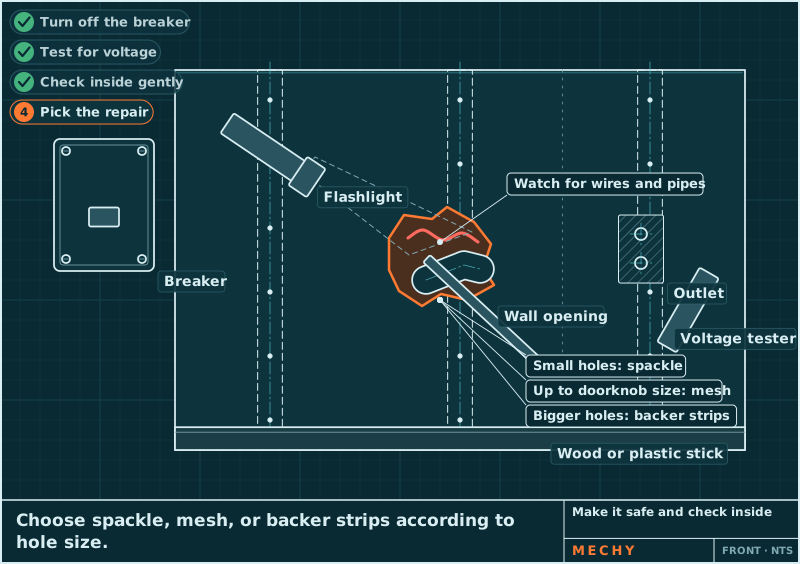
- Using a hole size that does not match the package.
- Overtightening the screw so the anchor spins and loses grip.
- Using a light-duty anchor for a heavy item.
- Hanging ceiling items on anchors not rated for ceilings.
Questions
Which drywall anchor should I use?
Match the anchor to the weight. Ribbed plastic or self-drilling suit light items, mollies suit medium, and toggle bolts or strap toggles suit heavy ones. Read the package rating for your wall thickness.
What size hole do I drill for a drywall anchor?
Use the drill size printed on the anchor package. Too big and the anchor spins; too small and it cracks or will not go in.
Do I need an anchor if there is a stud?
No. Screw straight into the stud, which holds far more than any drywall anchor.
Can I hang things from a ceiling with drywall anchors?
Only with anchors rated for ceilings. Others can pull out and fall. For heavy fixtures, use a joist or ask a pro.
Why does my anchor spin in the wall?
The hole is too big, or the screw was overtightened and stripped the drywall. Move to a new spot with a correct hole, or use a larger-rated anchor.
Updated
Not quite the same? Snap yours.
Mechy looks at your photo and redraws the steps for what you actually have.
First guide free. No sign-up, no card.
Related guides