
Heavy equipment jobs
How to Replace Bucket Teeth (Pin-On)
- 45 min
- Easy
- 6 steps
- 6 tools
- 2 parts
Snap yours and Mechy redraws these steps for it. First guide free, no sign-up.
Sample guide. A heavy-equipment mechanic hasn't reviewed this one yet, so search engines don't index it. Follow your machine's manual where they differ.
Short answer
Pin-on teeth come off with a hammer and a pin punch: set the bucket down on blocks, drive the side pin out, pull the worn tooth, clean the adapter nose, then fit a new retainer, the new tooth and a new pin. Bolt-on and weld-on teeth need other steps.
Safety first
Operator or mechanicDo these before step 1.
- DANGERNever reach or stand under a raised bucket. Set it down on solid blocks before you start.
- DANGEREngine off, key out, controls locked and tagged so nobody moves the machine while you work.
- WARNINGWear safety glasses and gloves: hammering pins can throw metal chips, and worn teeth have sharp edges.
- NOTICETeeth and pins are heavy. Keep your feet clear when a tooth comes free.
Stop and call a pro or the dealer if
- The adapter nose is cracked, loose or worn thin: adapters are welded to the lip and need a welder.
- The pin will not move after steady hammering: heat or a press may be needed, which is shop work.
Mechy's guides help, but they don't replace the maker's manual, your training or your site's rules. If something doesn't match what you see, stop and check.
Tools
Tick what you have. In the app, Mechy ticks the ones it can see in your photos.
Parts and supplies
- 1×Replacement teethSame system and size as your adapters (check the part number on the old tooth or the adapter)Check before you buy
- 1×Pins and retainersNew set for each tooth, matched to the tooth systemCheck before you buy
Steps
-
Step 1 of 6
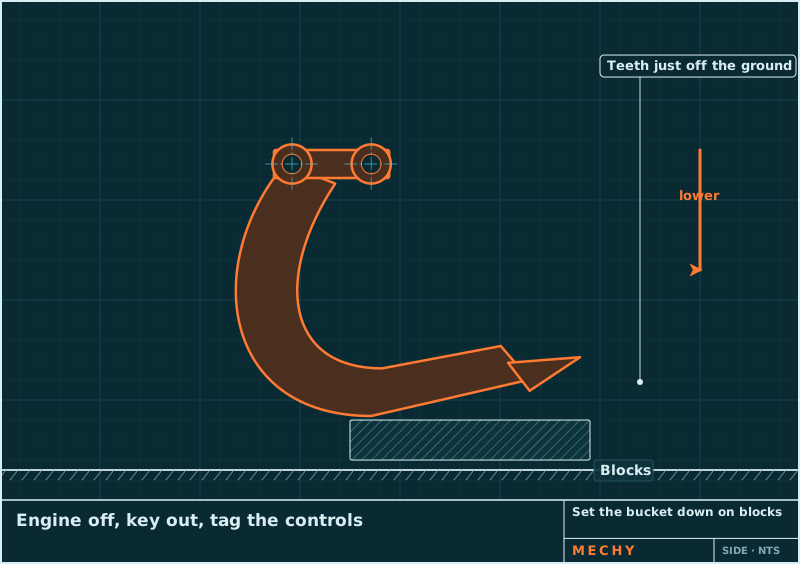
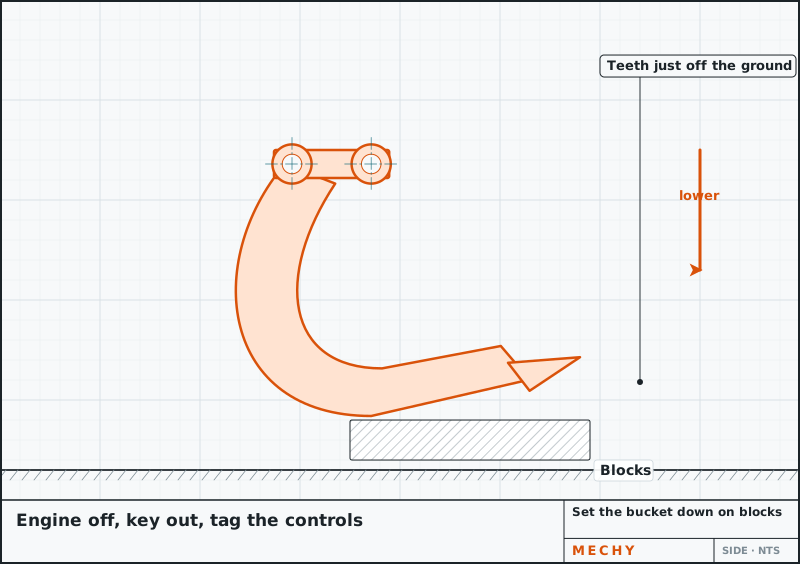
Set the bucket down on blocks
Curl the bucket so the teeth are level, lower it onto solid blocks with the teeth just off the ground, then shut down, take the key and tag the controls.
-
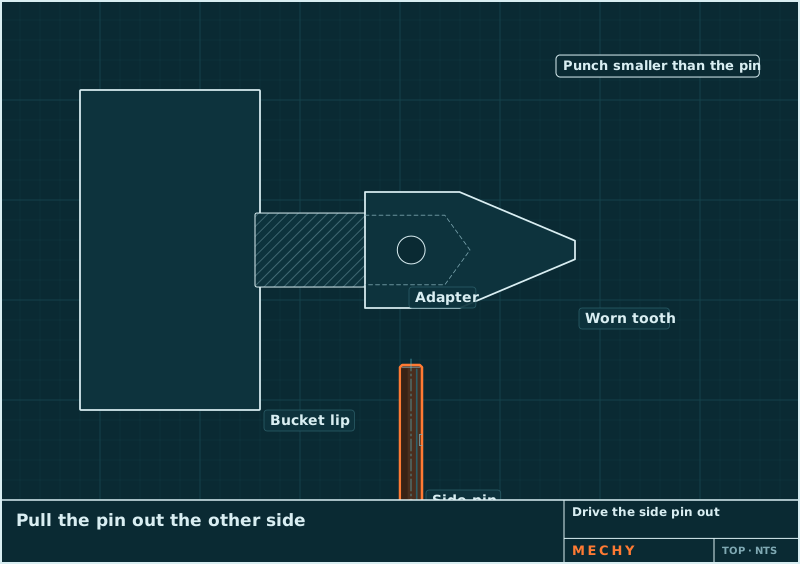
Step 2 of 6
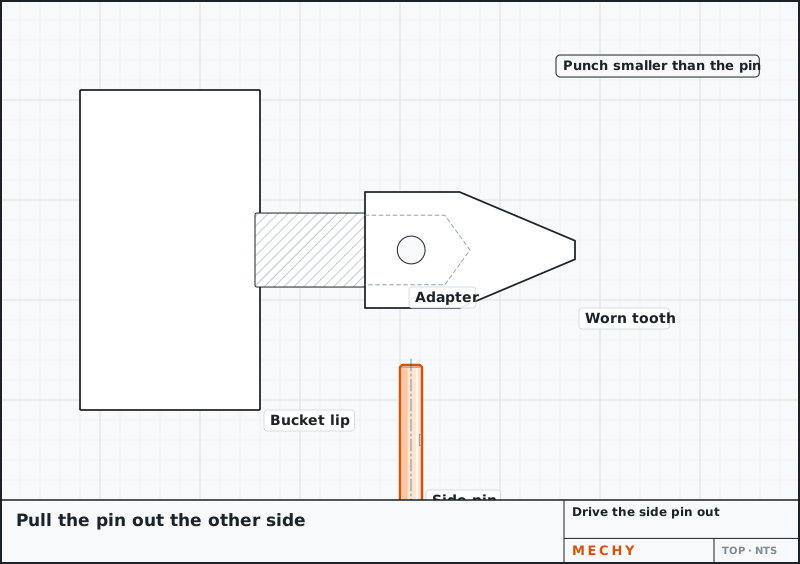
Drive the side pin out
Put a pin punch on the end of the pin and drive it straight through with a hand sledge. Pull it out the far side.
Keep your other hand clear of the striking face. Use the punch, never the hammer straight on the pin.
Hand sledge, Pin punch
-
Step 3 of 6
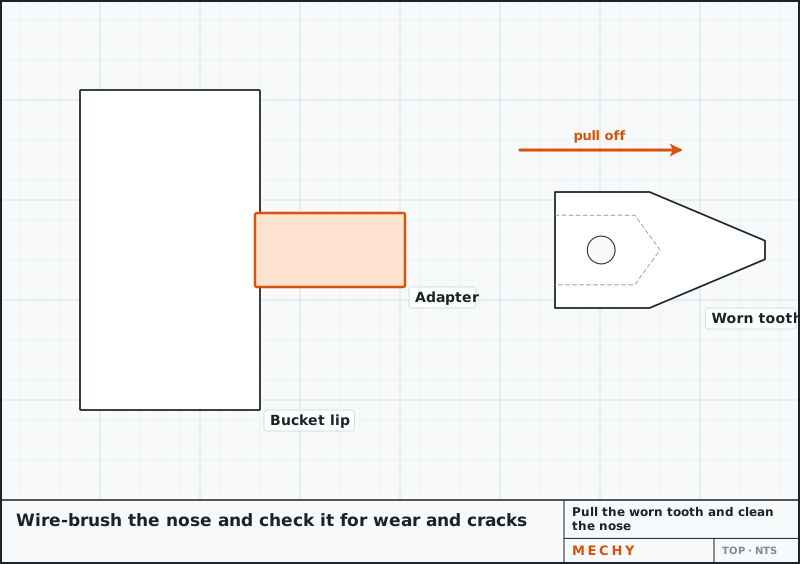
Pull the worn tooth and clean the nose
Pull or pry the worn tooth off the adapter. Wire-brush the nose and look for cracks or heavy wear before fitting the new tooth.
Pry bar, Wire brush
-
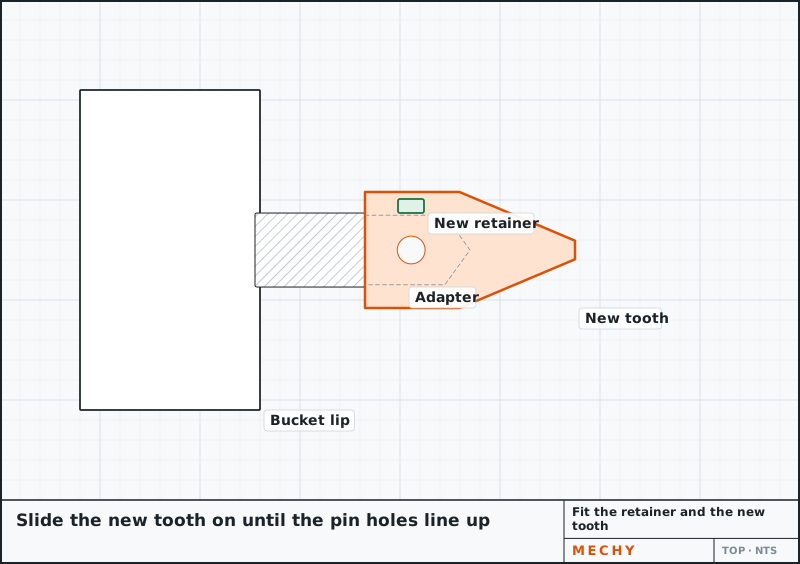
Step 4 of 6
Fit the retainer and the new tooth
Seat a new retainer in the adapter where the old one sat, then slide the new tooth onto the nose until the pin holes line up.
-
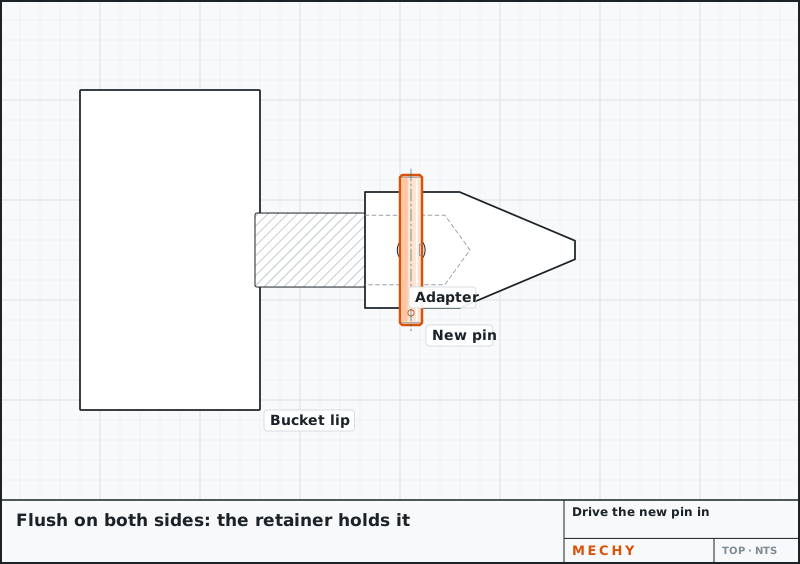
Step 5 of 6
Drive the new pin in
Start a new pin by hand, then drive it in until it sits flush on both sides and the retainer holds it.
Hand sledge
-
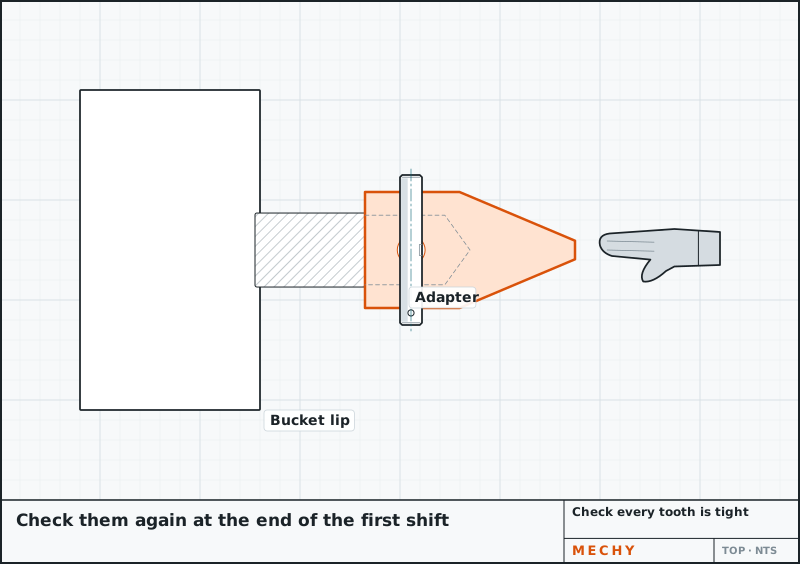
Step 6 of 6
Check every tooth
Pull and twist each tooth by hand: none should rock or slide. Check them again at the end of the first shift.


Common mistakes
- Reusing old pins and retainers: worn ones let the pin walk out and the tooth falls off.
- Running teeth until the adapter wears: adapters are welded on and cost far more to replace.
- Working under a bucket held up only by the hydraulics.
- Buying teeth by look alone: tooth systems that look alike often do not fit each other.
Questions
How do I know when bucket teeth need replacing?
When the tip has worn blunt and short, or the tooth is wearing back toward the adapter. Change them before the adapter nose starts to wear.
Can I reuse the pins and retainers?
It is not worth it. New teeth usually come with or need new pins and retainers, and a worn retainer is the most common reason a tooth falls off.
What is the difference between pin-on, bolt-on and weld-on teeth?
Pin-on teeth slide onto an adapter and are held by a pin and retainer. Bolt-on teeth bolt to the cutting edge. Weld-on teeth or adapters are welded to the lip and need a welder to change.
How do I find the right teeth for my bucket?
Read the part number cast into the old tooth or the adapter, or ask the dealer with your machine model and bucket width. Teeth from different systems can look alike and still not fit.
Updated
Different machine? Snap yours.
Mechy reads the machine and the part from your photo and redraws the steps, tools and parts for it.
First guide free. No sign-up, no card.